- Aug 2026, 01:24 PM
How to spot creative fatigue before it wastes budget
Creative fatigue is the point where the same audience has seen the same ad or landing page so often that its response starts to fall, while you keep paying the...
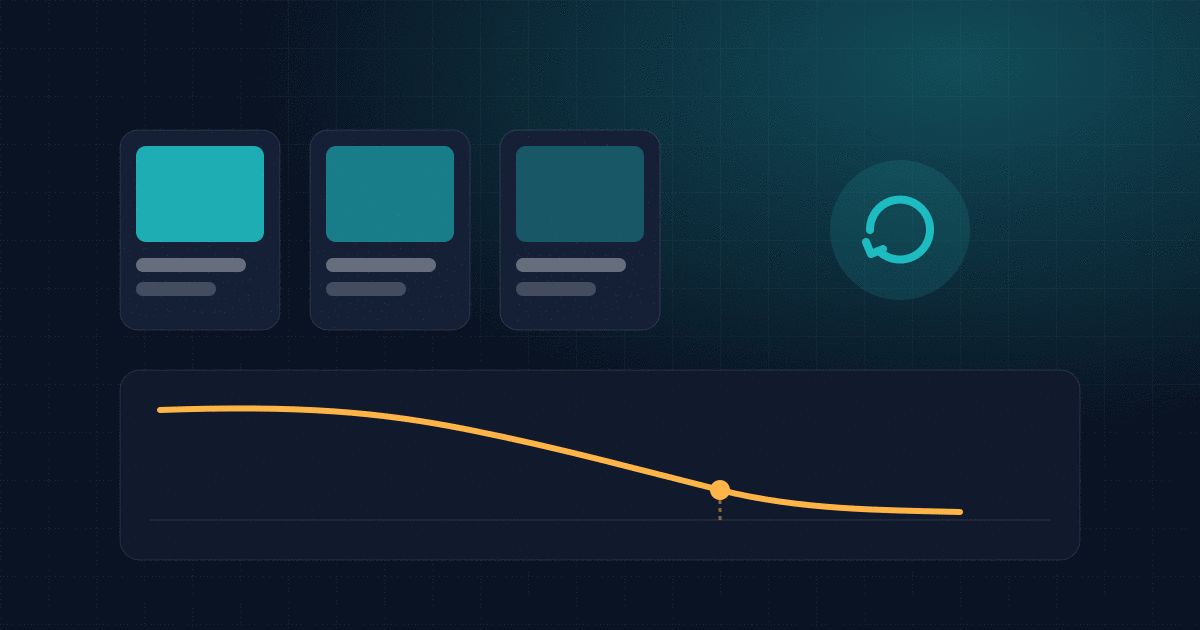
Creative fatigue is the point where the same audience has seen the same ad or landing page so often that its response starts to fall, while you keep paying the same price for every impression. It rarely shows up as a sudden stop. The early signs are a conversion rate that slides week after week, a cost per result that creeps up although your bid has not changed, and segments that used to convert and now only absorb budget.
This guide explains what fatigue looks like on CPM traffic such as popunder and direct link, how to measure it with numbers you already have, and what to change first. To test the method on live traffic, Adstean's self-serve network lets you set your own CPM bid from 0.10 and copy a campaign to try a new landing without touching the original.
Self-serve auction, minimum bid 0.10 CPM, no monthly minimum.
Create a campaign
What "creative" means on popunder and direct-link traffic
On banner or native campaigns the creative is the image and the headline. Popunder and direct-link traffic have no banner: the visitor arrives straight on your page, so the landing page is the creative. Its headline, its first screen and its offer are what the visitor judges in the first seconds. That moves the place where fatigue appears. You will not see it in a click-through rate, because nobody clicks an ad. You see it in what happens after the visit arrives.
The four signals worth watching
| Signal | Where to read it | What it usually means |
|---|---|---|
| Conversions per 1,000 impressions fall for two or three weeks in a row | Postback conversions in reports grouped by date | The people who wanted the offer have already seen it |
| Cost per conversion rises while the CPM bid is unchanged | Spend divided by postback conversions, per week | You are paying the same for less response |
| One country or device stops converting while others hold | One campaign per country, or device targeting | The fatigue is local, not general |
| The same websites deliver as many impressions but fewer conversions | Reports grouped by website | Those sources keep showing your page to the same users |
Watch the curve, not a single day
A steady drop over time is more important than a single bad day. Weekends, a public holiday in the target country or a new competitor in the auction can all move one day's figures. Fatigue is a trend, and a simple routine catches it:
- Pick one metric that reflects money: cost per conversion, or conversions per 1,000 impressions.
- Compare rolling seven-day blocks instead of individual days. Each block contains every weekday once, so day-of-week effects cancel out.
- Write down the date of every change you make: bid, budget, landing, targeting. A drop that starts right after a change is a reaction to that change, not fatigue.
- Call it fatigue when the metric worsens in three consecutive blocks with no change on your side.
An example with round, illustrative numbers (not a benchmark): at 1.00 CPM, 100,000 impressions cost 100. If they bring 50 conversions, each one costs 2.00. If the next weeks bring 40 and then 30 conversions for the same spend, the cost per conversion moves to 2.50 and then 3.33, while the bid has not moved at all. That is the curve to catch before it becomes the new normal.
Frequency is the first lever, not the last
Fatigue grows with repetition. Every Adstean campaign has a frequency cap: by default one impression per visitor every 24 hours, editable in minutes, hours or days. Before rebuilding a landing, look at that setting. A campaign that was opened up to more impressions per person will tire faster, and lowering the frequency costs nothing and quickly tells you whether repetition was the cause.
Refresh with intent
Good refreshes keep the offer clear and the message aligned with the landing page: fast load, one obvious action, and a promise that matches what the visitor expects. What changes is the part the visitor judges first. Change one of these at a time:
- the headline and the first sentence;
- the main image, or the order of the elements on the first screen;
- the angle of the offer: price, speed, ease of use or proof;
- the wording of the button.
One element per test. If you change four things and results improve, you will not know which one to keep, and the next refresh starts from guesswork.
Test the new version without breaking the old one
The cleanest test runs the old and the new landing at the same time, with the same targeting and the same bid, so the page is the only difference. In the Adstean dashboard the row menu of each campaign has Copy: it duplicates the campaign paused, with its own budget. Point the copy at the new landing, give both the same daily budget, and compare cost per conversion once each one has spent enough to show a pattern. Keep the winner and archive the other.
Use fatigue data to segment better
Creative changes often reveal which audience segments still respond. Fatigue is rarely even: a landing can be worn out in one country and fresh in another, or tired on desktop and fine on mobile. When the totals drop, split them by country, by device and by website. Segments that still convert show where to keep spending; the ones that stopped show where to refresh first or pause. The reporting metrics that matter more than raw volume explains how to set up those reports so the split takes a minute.
Fatigue or something else?
Not every drop is fatigue. Rule these out before you redesign anything:
- Tracking broke. If conversions fall to zero overnight, check that the postback still fires.
- The auction changed. The bidding chart shows won and lost auctions per minute. If you are suddenly losing more, a new bidder has arrived: that is a price question, not a creative one.
- Traffic quality changed. A burst of visits from one source with no conversions is a fraud signal, not fatigue. Exclude that website or IP range with a block list.
- The offer changed. A price rise or a product out of stock looks like fatigue in every segment at once.
Frequently asked questions
How long does a landing page last before it tires?
There is no fixed number of days. It depends on how large the audience is in each country, on your frequency cap and on how many impressions you buy per day. A narrow target with a large daily budget exhausts its audience sooner than a broad one with a small budget. Measure it with the weekly comparison above instead of a calendar.
Should I raise the bid when performance drops?
Only if you are losing auctions. A higher bid buys more of the same audience, and if that audience has already seen your page it can make fatigue worse. Check won and lost auctions first, then decide.
Is creative fatigue the same as banner blindness?
They are related but different. Banner blindness describes users who stop noticing a banner at all; fatigue describes a falling response to a message they have already seen. On full-page formats such as popunder the visitor always sees the page, so the problem is response, not visibility.
What should I do before scaling a campaign that is tiring?
Refresh first, scale afterwards. Read what to review before scaling campaign spend: more budget on a tired landing only buys the decline faster.
How often should I check for fatigue?
Once a week is enough, using the seven-day blocks described above. Daily checks are for delivery and spend, not for fatigue: a single day is too noisy to tell a trend from chance, and reacting to it usually means changing a landing that was still working.
What if I do not track conversions yet?
Then you cannot see fatigue, only spend. Delivery and cost per impression stay flat while the response falls, so the reports look healthy. Set up the postback first, confirm one real conversion arrives in the report, and start the weekly comparison from that date.
Does fatigue affect direct-link campaigns too?
Yes, in the same way as popunder: the landing is what the visitor sees, so repeated exposure lowers the response. Use the same weekly comparison and frequency check.
When you refresh creatives, a controlled test helps: set up a self-managed popunder campaign with your own bid and daily budget, and compare segments by country and device.

Digital marketing at Impulso Red
Buy traffic or monetize your website
From 1.00 CPM (minimum 0.10). Self-serve, no monthly minimum.
We'll send you the free PDF guide
“Monetize your website with popunder traffic”: pricing, install, common mistakes and how to earn more. No spam.
Expand the topic from the main network structure
Use these pages to keep exploring formats, advertisers, and publishers.
How to Monetize Website Traffic Without AdSense
You can monetize website traffic without AdSense by selling it to another ad network (display, nativ...

Popunder Traffic: What It Is and Is It Safe
Popunder traffic is a visit that opens your landing page in a new browser window or tab behind the o...

Attribution Basics for Programmatic Advertisers: Last-...
Attribution decides which touchpoint gets credit for a conversion, and that decision changes which c...
Share This
Latest insights
How to Monetize Website Traffic Without AdSense
Oct 2026, 05:40 PM
Popunder Traffic: What It Is and Is It Safe
Oct 2026, 09:20 AM
Attribution Basics for Programmatic Advertisers: L...
Sep 2026, 08:36 AM
Private Marketplace Deals vs Open Auction: Choosin...
Sep 2026, 08:36 AM